October 9, 2026
Fabian Bannasch
For nearly three weeks, an EvoLogics team and its sensor network guarded the Portuguese port of Sesimbra during REPMUS 2026, one of the world's largest exercises for maritime unmanned systems. Between 7 and 17 September alone, the sensors generated hundreds of alerts. The network listened for combat divers and underwater drones sent in by a red team at night – and helped reconstruct a real collision between a fishing boat and one of its own sensor buoys.
At REPMUS 2026, EvoLogics put its new harbour protection network to the test in about the most realistic setting short of a real operation: a working fishing port, reporting into the exercise's NATO command system, and an opposing force doing everything it could not to be heard.
Night raids - divers, drones and fast boats
At the heart of the harbour protection scenario were two night raids by a red team acting as the adversary. Its task was to get into the harbour from at least five nautical miles out, operating both on and below the surface. To do so, it deployed combat divers, autonomous underwater vehicles, uncrewed surface vessels, and small, fast boats.
The first night brought calm waters and clear visibility. Background noise remained moderate, and the cameras benefitted from good conditions. All three shore stations heard the underwater drones once they entered the harbour area, while larger underwater drones were picked up early on their approach.
The second night came with wind, waves and fishing boats, making these raid far more challenging. A strong north-easterly wind drove waves against the breakwaters, while fishing boats constantly came and went, flooding the sonars with noise. Despite these conditions, the network maintained continuous tracking of its targets. One underwater drone was followed continuously inside the harbour until the mid-raid break. Uncrewed surface vessels were detected and logged, while a small open boat carrying two people was held on the thermal camera at the harbour entrance. One uncrewed surface vessel was classified and released for reporting 30 seconds after initial detection.
The red team divers entered from a nearby beach. Within 20 minutes, the seabed cable registered signals and contact was reported. The detection software flagged a possible diver near the harbour entrance. Data analysis is ongoing to confirm contact and rule out a false alarm.
Beyond the exercise: real-world incident response
During the test, the network proved its value also in a real incident: after a fishing boat damaged an EvoLogics sensor buoy, the EvoLogics team used the system’s acoustic signatures, sonar tracking, AIS data, and video to reconstruct the collision. The case highlights the value of harbour protection networks for accidents and maritime police investigations.
Why are harbours so hard to protect?
Ports are vital infrastructure hubs: energy, food and goods pass through them, and naval bases sit inside them. Above the water, radar, cameras and the ships' own position transponders (AIS) give a fairly clear picture. Below the surface, most ports are largely unmonitored and effectively blind – a diver or a small underwater drone does not show up on radar.
A harbour is also one of the noisiest places in the sea. Ferries, fishing boats, pumps and waves against the breakwaters all make sound. Picking out a swimming diver in that noise is like trying to hear a whisper in a busy railway station.
How the network listens
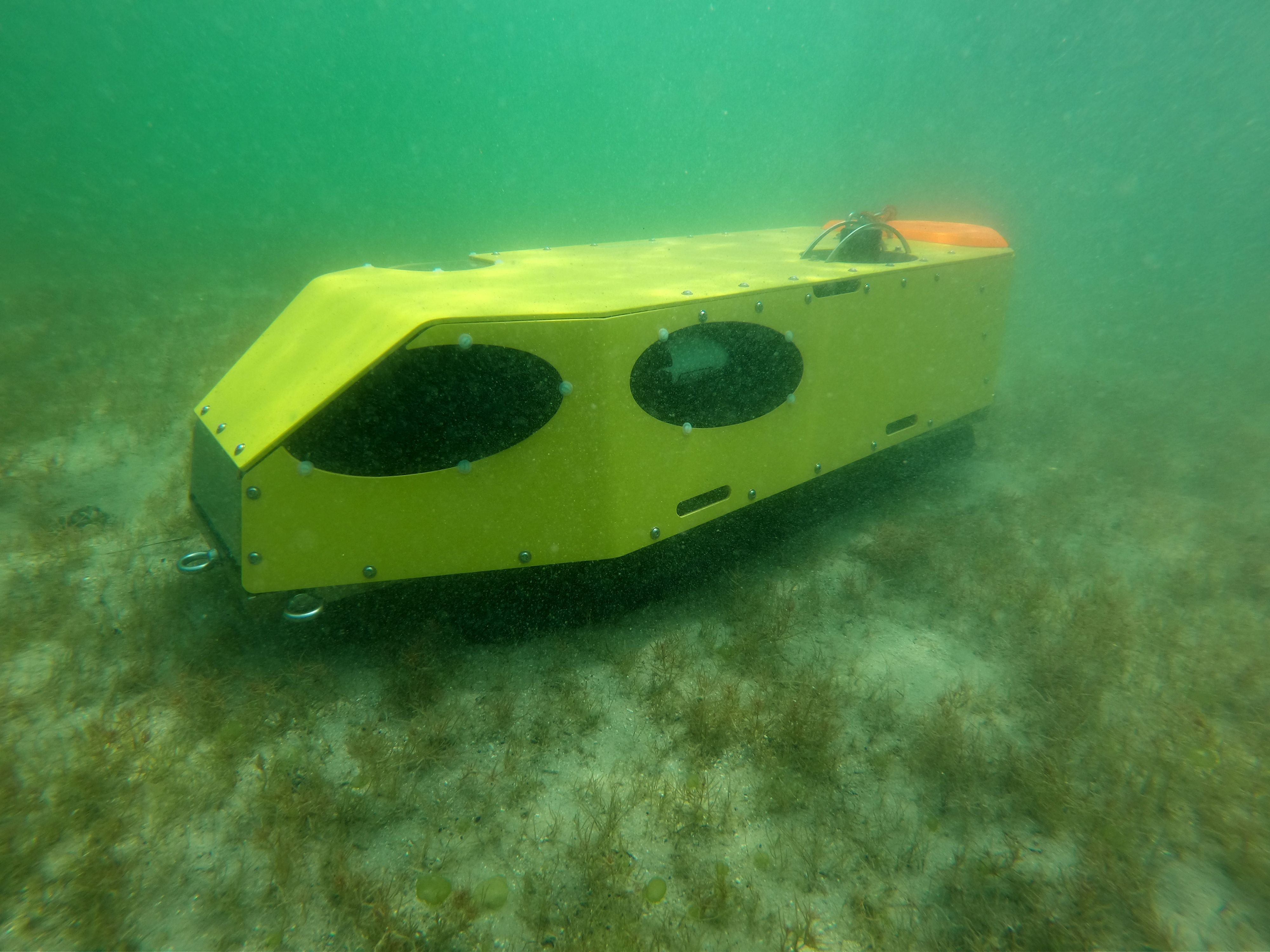
EvoLogics’ solution is a network of sensor stations that listens underwater, monitors above the surface, and merges all data into a single operational picture. It consists of three shore stations, two sensor buoys, seabed fibre-optic cable, active sonar, day and thermal cameras, AIS (Automatic Identification System) - and works like a set of ears placed around the harbour: one ear tells you roughly which direction a sound comes from; two or three ears tell you exactly where it is.
- Listening posts. Arrays of underwater microphones, called hydrophones, sit at shore stations and on buoys. They are passive: they emit no signal of their own, so an intruder cannot tell it is being heard. Each array measures the direction of a sound; where the bearings of several stations cross, the source is located.
- Active sonar. Where exact distance matters, an active sonar sends out sound pulses and measures their echoes.
- A listening cable. A fibre-optic cable on the seabed works like thousands of microphones in a row, registering vibrations along its whole length.
- Eyes above the water. Day and thermal cameras above the surface confirm what the hydrophones hear, and AI software marks vessels in the video automatically. AIS data shows which ships are identifying themselves.
All stations are linked by fibre and radio to a central server in a container on the pier. There, operators see sonar, video and ship traffic side by side, classify each contact and pass it on in NATO's standard reporting format.

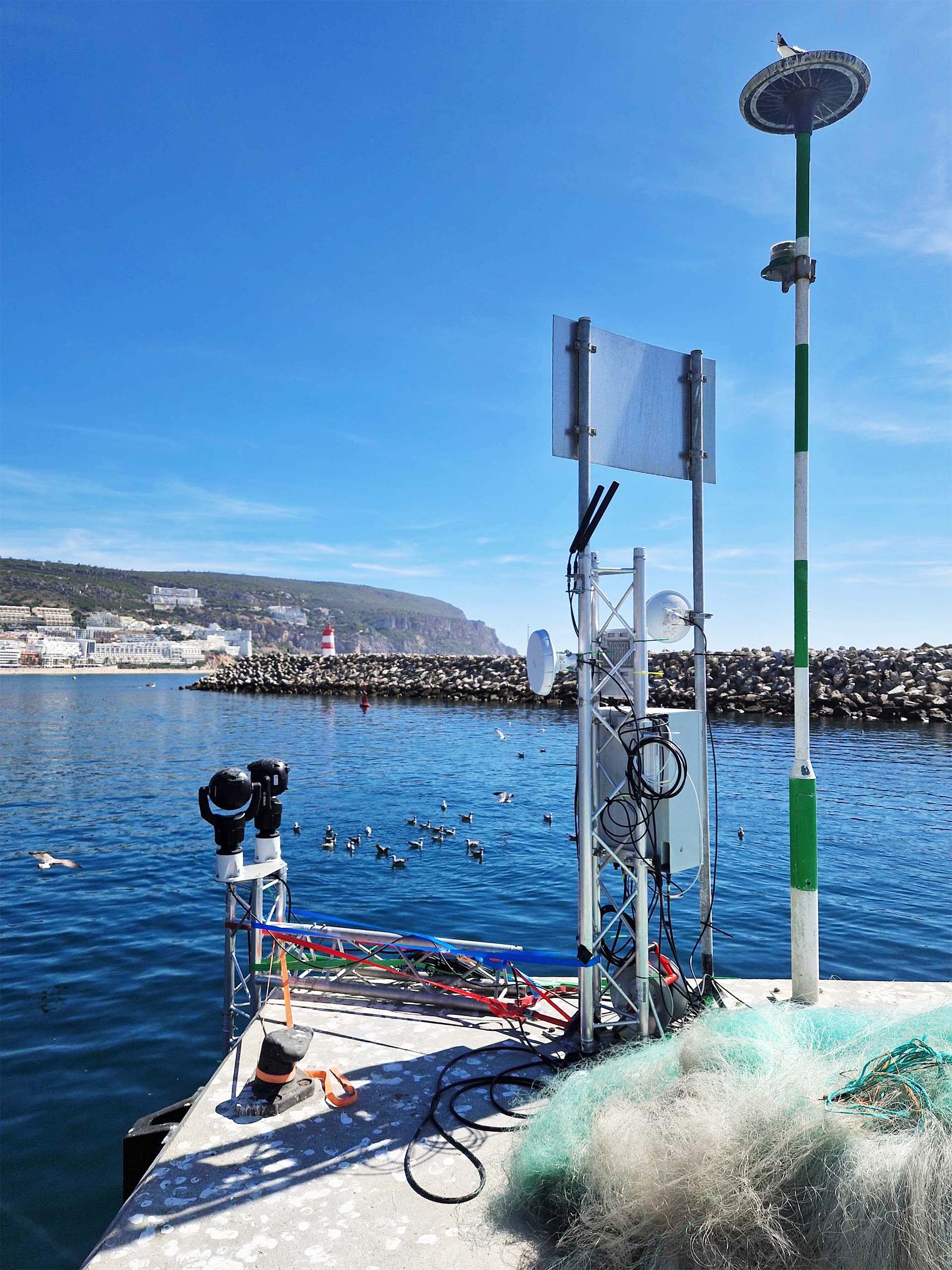
The EvoLogics harbour security network will be available in 2027.
Interested in learning more? Contact our team at sales@evologics.com
About REPMUS
REPMUS (Robotic Experimentation and Prototyping with Maritime Unmanned Systems) is a NATO exercise led every year by the Portuguese Navy on the Tróia peninsula and in the waters off Sesimbra, south of Lisbon. Co-organisers are the Faculty of Engineering of the University of Porto (FEUP), the NATO Centre for Maritime Research and Experimentation (NATO CMRE), the NATO Joint Capability Group for Maritime Unmanned Systems (NATO JCGMUS), and the European Defence Agency (EDA). The 2026 edition ran from 31 August to 25 September.
Navies, research institutes and companies from typically more than 20 countries bring drones for the air, the surface and the deep, and test them together in realistic naval scenarios. Sesimbra hosts the exercises focused on the underwater world. EvoLogics took part in the Maritime Security and Safety focus area, led by Portugal's National Maritime Authority, where one scenario was the protection of a harbour.