Novel autonomous vehicle for efficient surveys
Quadroin AUV
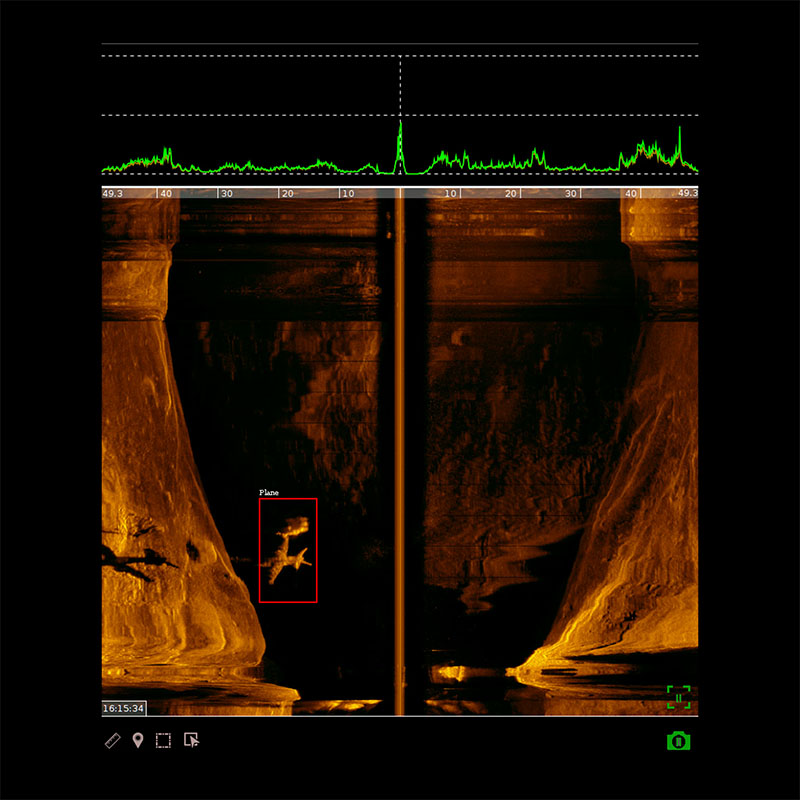
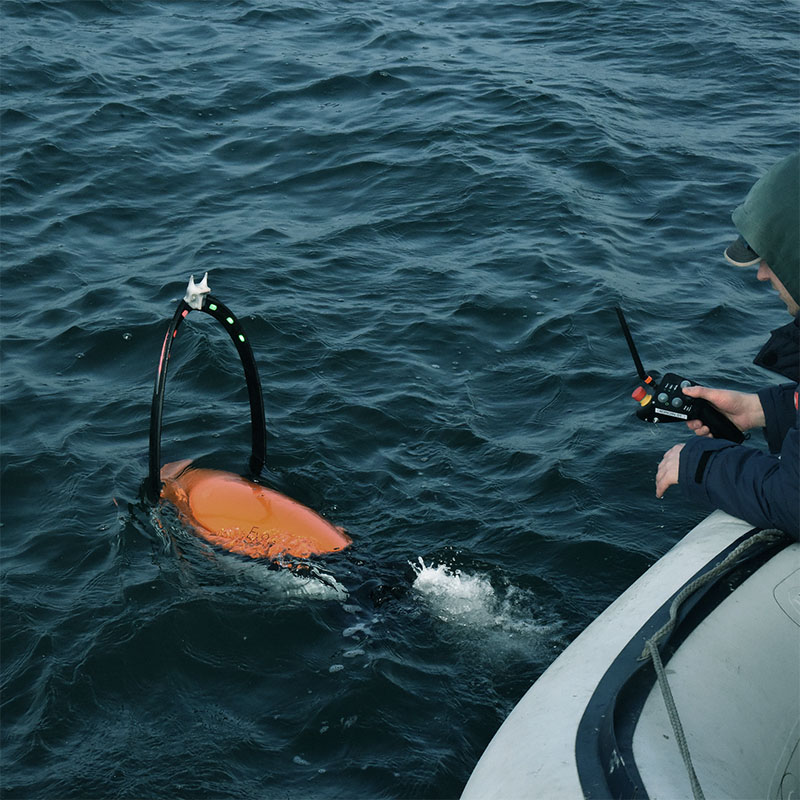
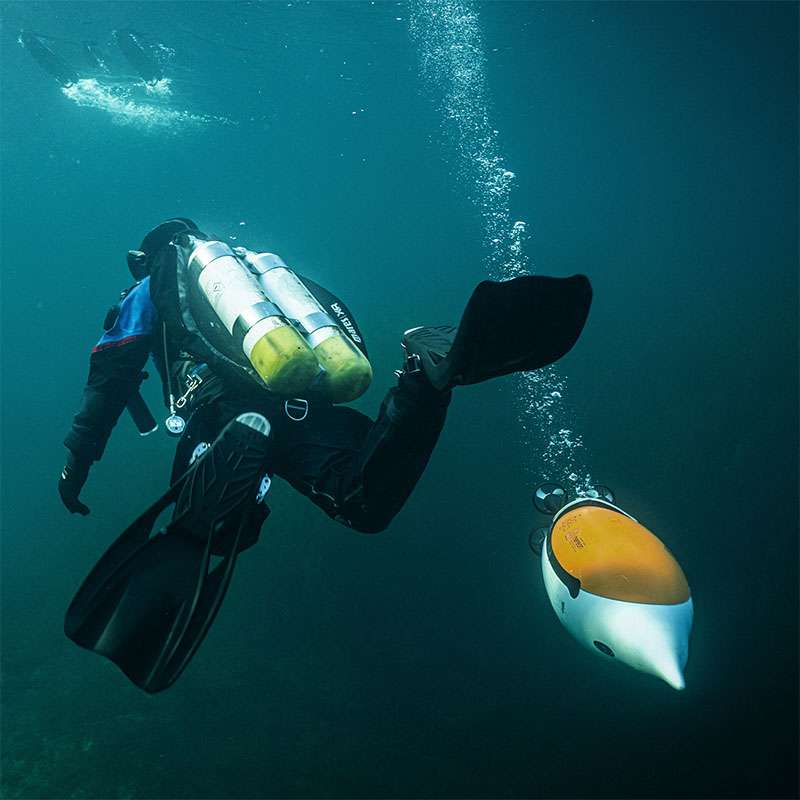
● The EvoLogics Quadroin is an autonomous underwater vehicle (AUV) designed for high-resolution side-scan sonar and camera surveys.
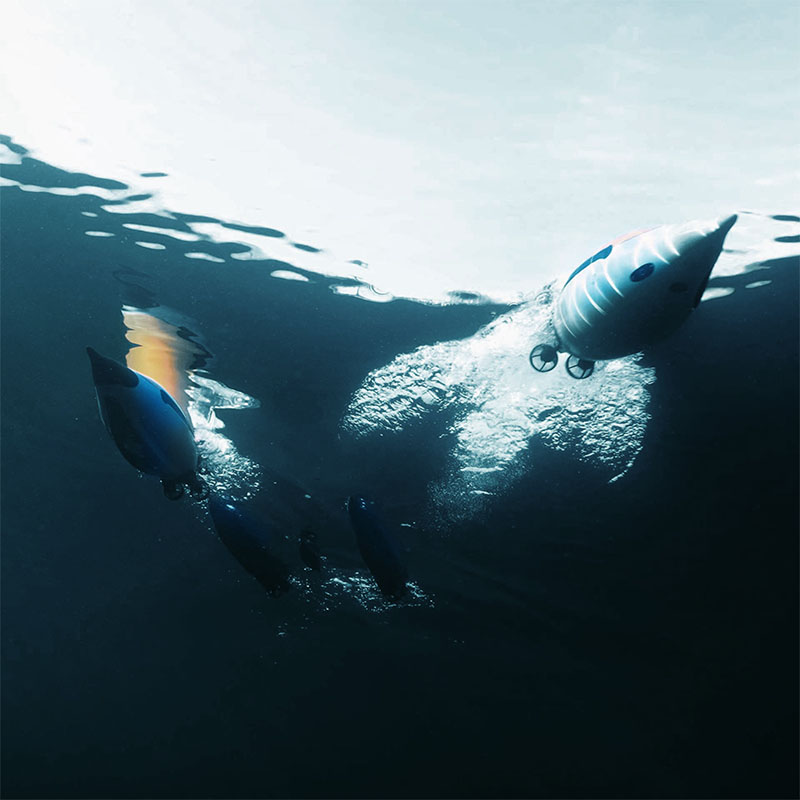
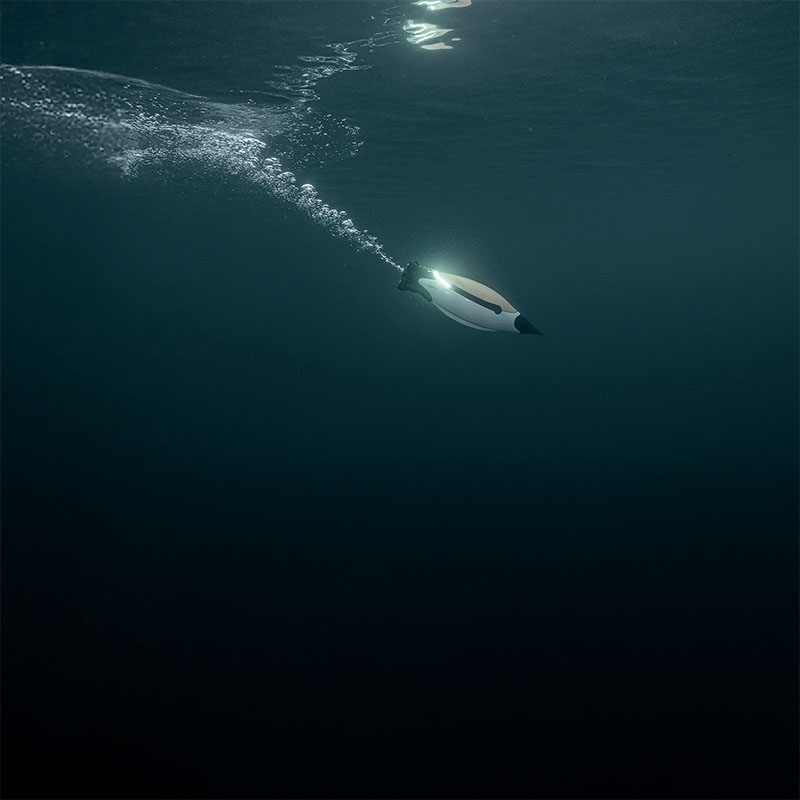
Its bionic, penguin-inspired hull combines hydrodynamic efficiency with high maneuverability, allowing speeds of up to 10 knots while maintaining low energy consumption for extended subsea operations.
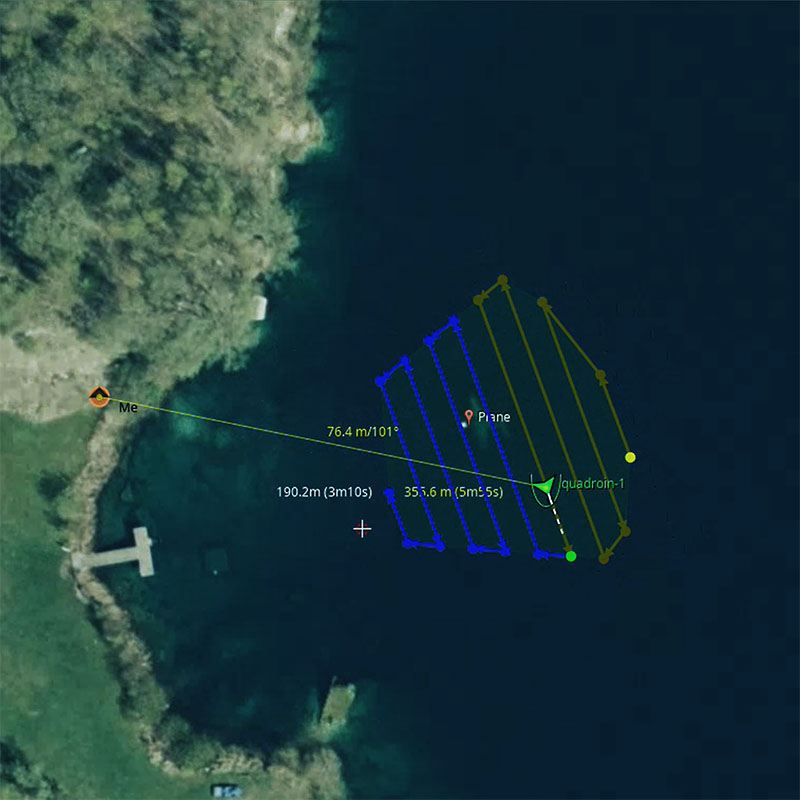
The Quadroin autonomously executes pre-programmed missions, collecting data along its waypoint grid. It is equipped with a side-scan sonar, a downward-looking full-HD camera, and an AI-based object recognition module for detailed visual documentation and detection of submerged assets.
A network of surface gateways enables precise navigation and seamless mission awareness - with live trajectory and status updates wirelessly available to the operator onshore.
Compact and easy to handle, the Quadroin streamlines operations, reduces deployment time, and provides a professional platform for underwater data collection – equally effective as a standalone tool or as part of a coordinated multi-vehicle network.
Quadroin AUV
The Quadroin platform is equipped with an integrated payload including sonar and imaging systems, acoustic and radio communication units, GNSS antenna, as well as onboard AI to detect subsea objects and ensure effective, collision-free autonomous operation.
Side-Scan Sonar
Generates detailed images of the seabed and underwater infrastructure.
Forward-Looking Sonar
Supports the onboard collision-avoidance system for safe navigation.
Underwater Full-HD camera
Supports visual documentation of the seabed and subsea assets.
Object Recognition Module
Runs directly onboard the vehicle, analyzing sonar and video feeds to detect and highlight objects during post-mission review.
Obstacle Avoidance System
Uses sonar data and AI processing to prevent collisions during autonomous missions.
Optional ADCP
Acoustic Doppler Current Profiler
CTD (Conductivity, Temperature, and Depth)
Sensors can expand the environmental monitoring capabilities of the vehicle
GNSS positioning
An integrated GNSS receiver provides positioning fixes at the surface with a pop-up multi-antenna that automatically collapses for the dive.
Inertial navigation
A single unit sensor combines DVL and AHRS / INS for dead-reckoning subsea navigation, enhanced with periodical GNSS fixes from the USBL/LBL acoustic positioning system.
Underwater Acoustic Modem
Links the vehicle with the surface gateway during the mission, enabling status updates and acoustic positioning that enhances inertial navigation with GNSS corrections.
The pop-up multi-antenna for GNSS positioning and over-air communication automatically retracts before the dive and stays flush with the vehicle body, maintaining a streamlined hydrodynamic profile throughout the mission.
WiFi or Long-range radio
At the surface, a WiFi or long-range radio access point connects the vehicle with the shore station - enabling vehicle configuration, mission uploads, and data download after recovery.
Cellular LTE
An optional LTE add-on extends communication beyond line-of-sight for increased operational flexibility.
The Quadroin’s control software supports the entire mission cycle: interactive, geo-referenced planning of the survey grid; monitoring and control of the mission during deployment; and post-mission download of the full dataset for detailed analysis and multi-format export.
Quadroin AUV


Quadroin AUV
The gateway serves as a central surface node, enabling acoustic positioning and communication with the Quadroin throughout the mission. It exchanges acoustic signals with the vehicle, computes its georeferenced position fixes, and transmits them back to enhance the Quadroin’s inertial navigation with intermittent GNSS corrections. Through WiFi or long-range radio links, the gateway relays position data and status updates from the Quadroin to the control station - ensuring consistent mission awareness.
Depending on operational needs, the gateway can be deployed as a stationary or mobile surface node - or as a hybrid network to cover extensive survey areas.
EvoLogics USBL Buoy is a compact, self-contained unit with USBL transceiver, dual GNSS, onboard PC, wireless access point and rechargeable battery, designed for reliable USBL positioning and acoustic communication and pre-calibrated for fast and easy deployment. Acting as a stationary surface node for the Quadroin, the Buoy exchanges acoustic signals with the vehicle within its range.
EvoLogics Sonobot 5 uncrewed surface vehicle equipped with a USBL arm is a mobile alternative to the stationary buoy. Similar to the Buoy, it integrates a USBL antenna, GNSS and wireless access point linking it to the control station. Operating as a surface node, the USV can actively follow the Quadroin, staying within optimal acoustic range for positioning and communication. With the mobility of an autonomous surface drone, the Sonobot ensures continuous coverage and extends operational flexibility for Quadroin missions.
A vessel fitted with an EvoLogics USBL acoustic positioning system can act as the primary surface hub for Quadroin missions, serving as the launch and recovery platform, acoustic gateway, and control center.
For complex, large-scale missions, stationary and mobile nodes can be combined into a hybrid surface gateway network to achieve wide-area coverage and enhance acoustic positioning accuracy. By integrating stationary Buoys and mobile Sonobots, the system can be configured as an LBL array or a hybrid USBL/LBL solution, tailored to specific mission requirements. This flexible architecture improves acoustic geometry, optimizes the accuracy of navigation support, and ensures continuous communication with the Quadroin across expansive areas.
Quadroin AUV
Operating Depth
150 m
Speed
Up to 10 knots
Endurance
Up to 12 h at 1.5 m/s (default survey speed), depending on payload
Power Supply
Internal rechargeable Li-Ion batteries,
optionally swappable
Battery Capacity
1.3 kWh
Charging Time
< 6 hours
UW Communication & Positioning
MINI 18/34 acoustic modem with atomic clock, up to 13.9 kbit/s
Navigation
GNSS, Nortek Nucleus1000 DVL with AHRS &
INS, USBL/LBL aided positioning, collision avoidance with forward-looking single-beam echosounder
Radio Communication
Wifi 2.4 GHz, 863–870 MHz ISM modem
(915 MHz optional), StreamCaster 2x2 MN-MIMO 2200–2500 MHz, LTE optional
On-board PC
EvoLogics AI module for high-end
onboard computing
Payload Options
Side-scan sonar, downward full-HD camera with dimmable LED lights, object recognition hardware/software, ADCP, CTD
Payload Capacity
Up to 3 kg
Dimensions
Length 1120 mm, Ø 320 mm max.
Weight
< 25 kg in air / buoyancy trimmable
Quadroin AUV

EvoLogics’ founder, Dr. Rudolf Bannasch, has studied Adélie penguins and their exceptional swimming efficiency since the 1980s, conducting field research in Antarctica alongside extensive wind tunnel and water tank experiments. His findings showed that spindle-shaped flow bodies modeled after penguins achieve extremely low drag coefficients in water.
These bionic design principles first materialized in the NaviMUM PingGuin AUV, developed by EvoLogics as part of the Modifiable Underwater Mothership (MUM) R&D program. Demonstrated in 2020, the PingGuin incorporates a bionic, penguin-inspired spindle hull designed to minimize drag, with very few protruding components to maintain hydrodynamic efficiency. The vehicle was prototyped as a multifunctional communication node within the MUM system, capable of operating in a self-coordinated swarm to enable adaptable positioning and data relay scenarios.
The concept evolved further through collaboration with Prof. Burkard Baschek and the Helmholtz-Zentrum Hereon - resulting in the first-generation Quadroins AUVs, built and tested in 2021. As part of the Helmholtz Association’s MOSES initiative, the first Quadroins were equipped with multiparameter probes to collect data on ocean eddies - scanning the water body layer by layer to collect geo-referenced data on the physical water parameters at different depth horizons.
Building on these foundations, EvoLogics advanced the Quadroin platform from prototypes to serial production with optimized internal layout, updated propulsion and navigation systems, and expanded payload capacity. The current Quadroin generation features a side-scan sonar, full-HD camera, and onboard AI-processing for object recognition and collision avoidance, with advanced communication and navigation systems supporting complex underwater operations.
The Quadroin platform is ready for cooperative, multi-vehicle operations and contributes to ongoing advances in smart autonomous marine technology.
Contact
Our experts can help you select the right combination of sensors, positioning and communication options to match the Quadroin configuration to your operational needs.
Get in touch and share your project requirements – let’s put together the optimal Quadroin system for your operations.
All information you provide us is treated with strict confidence and stored only in relation to your request.